
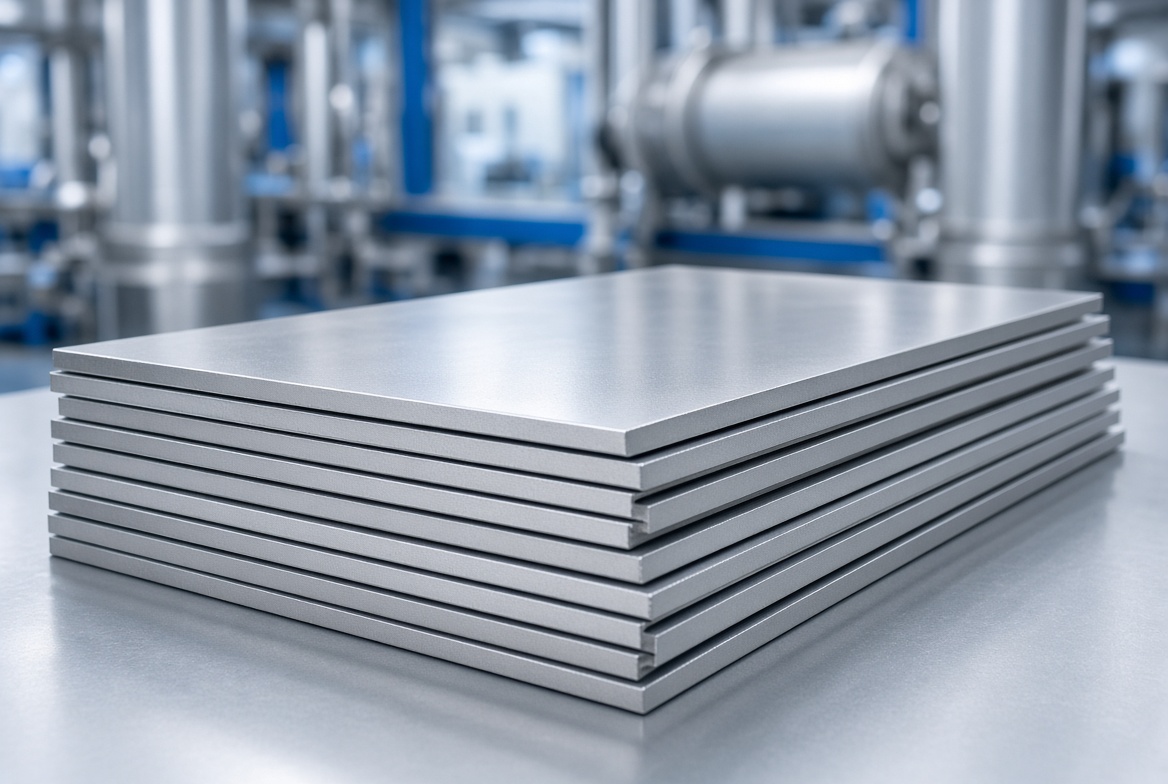
Titanium plates have become one of the most important high-performance materials in modern industry. Thanks to their outstanding combination of high strength, low density, and excellent corrosion resistance, titanium plates are widely used in aerospace, chemical processing, medical, marine, energy, and other advanced manufacturing sectors.
Compared with traditional stainless steel and aluminum alloys, titanium plates provide a unique balance of performance that makes them the material of choice for demanding applications. In this article, we will explore the main applications of titanium plates, their key advantages, and how different grades are selected for specific industries.
1. Key Advantages of Titanium Plates
Titanium plates stand out due to the following core properties:
- High strength-to-weight ratio: Titanium offers strength comparable to many steels while weighing only about 60% as much.
- Outstanding corrosion resistance: Excellent resistance to seawater, chlorides, oxidizing acids, and many aggressive chemical environments.
- Superior biocompatibility: Non-toxic and well tolerated by the human body, making it ideal for medical implants.
- Wide temperature performance: Maintains mechanical properties from cryogenic temperatures up to around 500°C.
- Good fabricability: Can be formed, machined, and welded with proper techniques.
These characteristics explain why titanium plates continue to replace conventional metals in critical applications.
2. Major Applications of Titanium Plates
Aerospace Industry Titanium plates are extensively used in aircraft structures, engine components, and fasteners. Leading manufacturers such as Boeing and Airbus rely on titanium to reduce aircraft weight and improve fuel efficiency. Common applications include fuselage skins, bulkheads, engine nacelles, and structural frames.
Chemical Processing In the chemical industry, titanium plates are used to manufacture reactors, heat exchangers, condensers, piping, and storage tanks. They perform exceptionally well in highly corrosive environments such as chlorine, acetic acid, and nitric acid systems, significantly extending equipment service life and reducing maintenance costs.
Medical and Biomedical Engineering Commercially pure titanium plates (especially Grade 1 and Grade 2) are widely used for surgical implants, bone plates, dental implants, and pacemaker housings due to their excellent biocompatibility. Medical-grade titanium must meet strict standards such as ASTM F67 or ISO 5832.
Marine and Offshore Engineering Titanium plates offer virtually complete resistance to seawater corrosion. They are used in ship hulls, propellers, seawater desalination plants, and offshore platform components, providing long service life in harsh marine environments.
Power Generation and Energy Titanium plates are commonly applied in condensers and heat exchangers in thermal and nuclear power plants, especially in systems cooled by seawater. Their resistance to erosion-corrosion under high-velocity water flow makes them highly reliable.
Automotive and Sports Equipment High-end vehicles, motorcycle exhaust systems, bicycle frames, and golf club heads increasingly use titanium plates to achieve lightweight design without sacrificing strength.
Architecture and Design In premium architectural projects, titanium plates are used for exterior cladding, roofing, and artistic structures, combining durability with a distinctive metallic appearance.
3. Common Titanium Plate Grades and Their Uses
| Grade | Key Characteristics | Typical Applications |
|---|---|---|
| Grade 1 (GR1) | Highest ductility and excellent corrosion resistance | Chemical equipment, medical implants |
| Grade 2 (GR2) | Best balance of strength and formability | Heat exchangers, marine components, general structures |
| Grade 5 (Ti-6Al-4V) | High strength titanium alloy | Aerospace structural parts, high-strength components |
Selecting the right grade depends on the operating environment, mechanical requirements, and fabrication methods.
4. Tips for Purchasing and Using Titanium Plates
- Clearly define the service environment (corrosive media, temperature, stress conditions).
- Confirm the required standards and certifications (e.g., ASTM B265, AMS, medical standards).
- Choose suppliers with stable production capacity and strict quality control.
- Optimize thickness and design to achieve the best balance between performance and cost.
5. Conclusion
As advanced manufacturing continues to evolve, the demand for titanium plates is expanding across more industries. Whether the priority is lightweight design in aerospace, long-term corrosion resistance in chemical plants, or biocompatibility in medical devices, titanium plates deliver proven value.
If you are looking for a reliable titanium plate supplier, we specialize in the production of titanium bars, titanium wires, and titanium plates in grades including GR1, GR2, and GR5. With our own manufacturing facilities, we offer stable quality, competitive pricing, and reliable delivery through a direct factory supply model.
Feel free to contact us for technical support, quotations, or sample requests.