
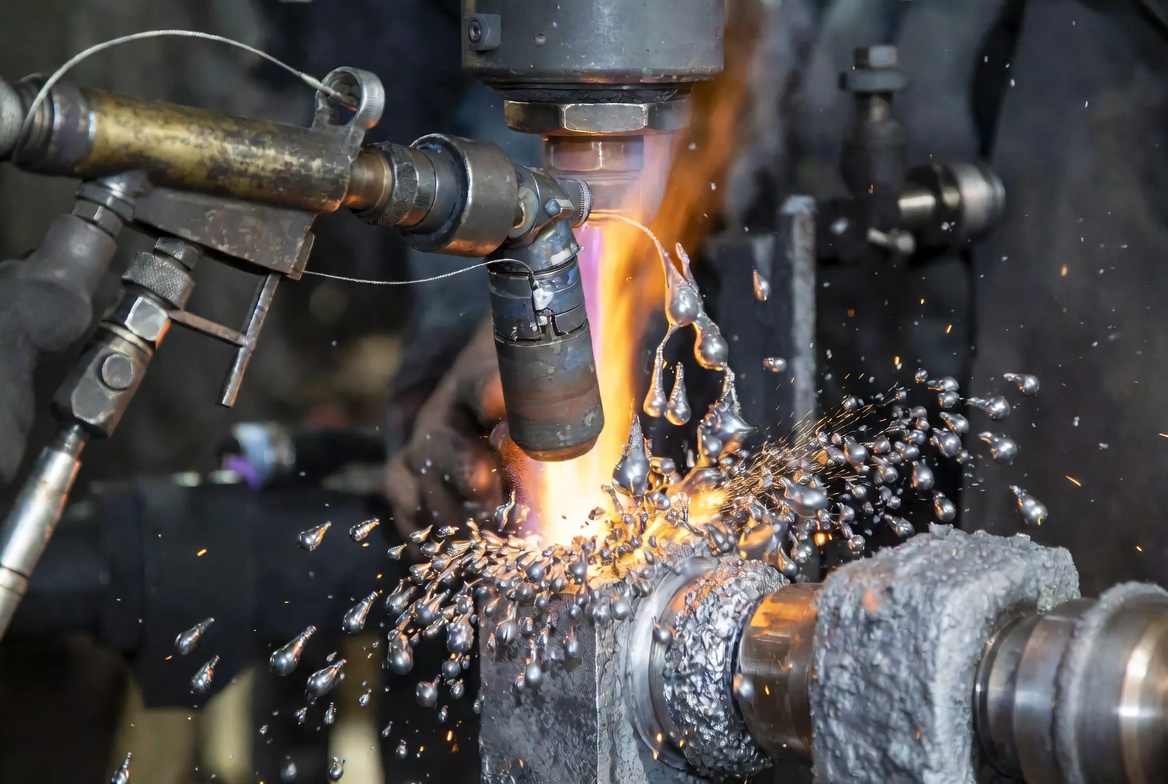
Arc spraying is a mature thermal spraying technology known for its high deposition efficiency and relatively low equipment cost. It is widely used for surface protection, repair, and functional coatings in industrial equipment. Titanium wire, as a high-performance spraying material, is gaining increasing attention in high-end corrosion protection, wear resistance, and special functional coating applications due to its unique physical and chemical properties. This article provides a detailed analysis of the advantages and disadvantages of titanium wire in arc spraying and shares key operational precautions to help enterprises and engineers better understand and apply this technology.
1. Advantages of Titanium Wire in Arc Spraying
1. Excellent Corrosion Resistance After spraying, titanium can rapidly form a dense, stable, and self-healing titanium dioxide (TiO₂) passivation film on the surface. This film provides superior resistance to seawater, chloride ions, acids, alkalis, and most organic acids — far better than traditional zinc, aluminum, or stainless steel spraying materials. It is particularly suitable for long-term protection of critical components in marine environments, chemical equipment, and wastewater treatment systems, effectively extending equipment service life and reducing maintenance costs.
2. Good Biocompatibility Titanium is recognized as a biologically inert material. The sprayed coating does not release harmful substances and is non-toxic to human tissues. This makes it highly advantageous in medical device surface treatment, food processing equipment, and bioengineering fields. For example, in artificial joint repair or high-end medical equipment manufacturing, arc spraying with titanium wire can significantly improve product safety and long-term stability.
3. Higher Strength and Hardness Compared to pure aluminum or zinc coatings, titanium wire sprayed layers offer higher mechanical strength and moderate hardness. They provide excellent corrosion protection while also delivering good wear resistance and impact resistance. This makes them suitable for components that must withstand mechanical loads and friction, such as ship propellers, pump impellers, and chemical mixing equipment.
4. Lightweight Advantage With a density of only about 60% that of steel, titanium wire coatings achieve high-performance protection without significantly increasing the overall weight of the workpiece. This is especially important in aerospace, rail transportation, and high-end equipment manufacturing, helping designers achieve lightweight goals while meeting performance requirements.
5. Good High-Temperature Stability Titanium sprayed coatings maintain good structural stability and oxidation resistance in medium-to-high temperature environments, making them suitable for surface protection of components operating at elevated temperatures.
2. Disadvantages of Titanium Wire in Arc Spraying
1. High Cost Titanium wire is a premium metal material with significantly higher raw material costs than conventional wires such as zinc or aluminum. Combined with higher process losses and equipment requirements, the overall spraying cost is notably elevated, which can be a major limitation for budget-sensitive projects.
2. Relatively Low Spraying Efficiency Due to titanium’s high melting point (approximately 1668°C), it melts more slowly during arc spraying, resulting in lower deposition efficiency compared to low-melting-point metals like aluminum and zinc. This extends spraying time and increases energy consumption, especially in large-area applications.
3. Moderate Coating Adhesion The bonding strength between titanium coatings and most substrate metals is relatively limited. Poor process control or inadequate surface preparation can lead to cracking or localized delamination, often requiring optimized parameters or a bond coat.
4. Pronounced Oxidation Issues Titanium is highly reactive with oxygen when molten. During spraying, it easily forms porous and brittle oxide inclusions, which reduce coating density, bonding strength, and overall performance.
5. High Requirements for Equipment and Process Titanium wire arc spraying demands higher-power, more stable equipment and precise control of gas flow, wire feeding, and power parameters. Improper settings can cause wire jamming, excessive spatter, and increased operational difficulty and maintenance costs.
3. Precautions for Arc Spraying with Titanium Wire
1. Strict Control of Process Parameters Operators must precisely set voltage, current, spray distance, and wire feed speed according to the titanium wire diameter (commonly 1.6mm or 2.0mm). Higher voltage with moderate current is generally recommended to avoid under-melting or overheating. Spray distance is typically controlled between 150–250mm, and optimal parameters should be determined through testing.
2. Proper Selection of Shielding Gas To minimize oxidation, pure argon or argon-nitrogen mixtures are strongly recommended. Using compressed air significantly increases oxidation and degrades coating performance. Inert gas protection should be prioritized when conditions allow.
3. Thorough Surface Preparation The substrate must be thoroughly cleaned (degreased and derusted) and roughened (Sa2.5 or better sandblasting). For applications requiring high adhesion, an aluminum or nickel-aluminum bond coat is recommended before applying the titanium layer.
4. Environmental and Safety Controls Spraying should be performed in a dry, low-humidity indoor environment. Titanium dust poses an explosion risk at certain concentrations, so excellent ventilation and dust collection systems are essential. Operators must wear professional protective equipment including dust masks, safety goggles, and protective clothing.
5. Post-Spraying Treatment After spraying, mechanical machining, polishing, or grinding is recommended to achieve a smoother, denser surface. For critical components, diffusion annealing can further improve metallurgical bonding and overall performance.
6. Quality Inspection and Control Coating thickness, bond strength, porosity, and corrosion resistance should be tested after each batch. Complete process records and inspection reports must be maintained to ensure compliance with customer specifications.
Although titanium wire arc spraying involves higher costs and stricter process requirements, its outstanding corrosion resistance and special functional properties make it irreplaceable in high-end anticorrosion, medical, and aerospace applications. Enterprises should comprehensively consider the working environment, performance requirements, and budget when selecting materials and processes.